Monday, January 30, 2017

Reading Notes: Ramayana, Part C

Image result for hanuman
Hanuman Meditating (Flickr)

The story of how Rama and Lakshmana meet Hanuman is definitely on my favorites list. I remember hearing different variations of this story growing up and the detail in the R.K. Narayan version is definitely very good. Without a doubt, Hanuman is one of my favorite Hindu Gods, both in the Ramayana and in general. He is known as the God of strength and courage, which I'd say is pretty applicable to many situations. However, I also think that his stories and service to both Rama and Sugreeva work well with his title as God of courage. He is completely devoted and becomes a disciple of Rama, promising to help him on his journey to rescue Sita. I know that when I was a child and would get scared of the dark or a thunder storm, my mom or dad would tell me a Hanuman story and it would give me courage again. In that way, I think reading about Hanuman is interesting because it gives me perspective on his pure devotion to Rama but also how he came to be known as the God of courage.

Bibliography: R.K. Narayan, Ramayana, Reading Guide

Sunday, January 29, 2017

Feedback Thoughts

Image result for feedback
Feedback (Flickr)


"Separate the idea from the person"

That's a quote that I have heard pretty frequently over the last semester and one that I think is very important to know when giving or receiving feedback. When reading all four of the readings (Silence the Critical Voices in Your Head, 5 Tips for Receiving Feedback Like a Champ, 7 Key Characteristics of Better Learning Feedback, The Difference Between Praise That Promotes Narcissism vs. Healthy Self-Esteem), I thought that was the underlying theme as they touched on mindfulness, "state" vs. "trait", listening to positive feedback as much as negative feedback, being goal-referenced, and health self-esteem. Personally, I love feedback because it provides room for growth while understanding positive attributes. Like what was said in the "Silence the Critical Voices in Your Head" article, I think it is important to receive positive feedback as much as negative feedback. Building on your strengths is vital to be able to work on weaknesses. In that way, I know that when I give feedback, I like to get straight to the point because it is not usually that helpful to beat around the bush. 

Thursday, January 26, 2017

Week 2 Storytelling: The Ramayana

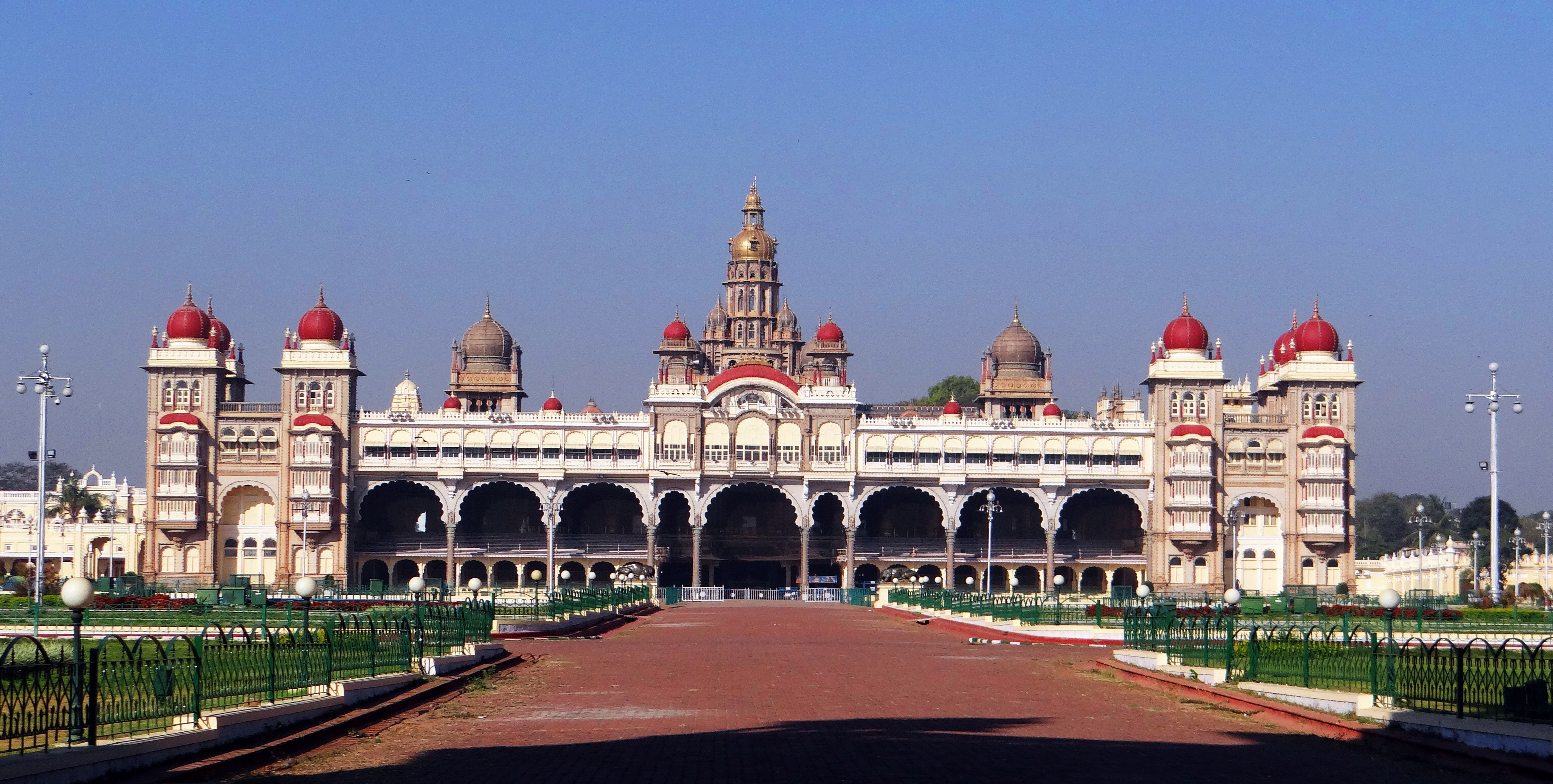
Image result for palace in india
Mysore Palace (Good Free Photos)

It was a dark day. The clouds were dark and implied an impending storm. On the earth, the trees and plants were gloomy as it had been days since they had seen the light of the sun. The week had taken such a turn as the week prior, the sun peeked out from behind the light and fluffy clouds. The roses and neem trees looked healthy and bright. There was quite a difference between the two weeks. The little bird that usually chirped when the sun was out sat quietly on the branch and watched down on the little girl playing on the grass beneath. This little girl's name was Madhu.

Madhu lived with her parents and siblings in Mithila, King Janaka's kingdom. She had heard that there were people traveling through the town and that they would be at the royal court the next day to visit King Janaka. The whole kingdom was invited as the guests were rumored to be special. Madhu also knew that the King wanted to get his daughter, Sita, married. However, there was a stipulation: King Janaka had a bow that once belonged to Lord Shiva. He said that the person that could pick up the bow and then string it would be considered as suitable for Sita. Madhu had an inkling that one of these guests would be Sita's future husband.

When the day arrived for the citizens of the kingdom to go to the palace, Madhu was ecstatic. She would finally get to see and hear what the buzz for the last week had been about. When she walked in through the gates and saw the guests being brought in to see King Janaka, she felt the room immediately brighten up. The King introduced the guests as Rama, Lakshmana, and Vishwamitra. King Janaka requested that Shiva's bow be brought out in hopes that Rama would be able to string it. The anxiety in the room was building as the royal attendees brought out Shiva's bow. Some of the citizens closed their eyes, some clasped their hands in prayer, and others silently watched in hope.

With much ease, Rama lifted the bow, strung it, and then a loud CRACK struck through the room. The bow broke into two pieces and the room went silent. When everyone realized what had just happened, the room erupted in applause and joy. Outside, the skies cleared and the sun started shining again. The little bird began chirping once more and Madhu was overjoyed with happiness.

Author's Note: This section of the Ramayana is always told from the perspective of Rama or Sita so I thought to add a little spin to it. From a complete outsider's perspective. I used the way Sita felt after she saw Rama as inspiration for the feeling of utter gloom at the beginning of the story and the rest just flowed.

Bibliography: R.K. Narayan, Ramayana, Reading Guide

Tuesday, January 24, 2017

Reading Notes: Narayan's Ramayana, Part B

Image result for rama's exile
Rama, Lakshmana, and Sita on Exile (Wikipedia Commons)

I thought one of the strongest aspects about this reading was the first paragraph where Narayan says "Sumithra also bewailed Rama’s exile and tried to stop him" and then later says "While they were talking, a servant maid sent by Kaikeyi came bearing in her arms garments made of tree barks, a reminder for Rama to change quickly and depart." I think it's just the way these two sentences are stated that make them a stark contrast. It is clear that most of the kingdom is upset that Rama is being exiled but, Kaikeyi is ready to get rid of Rama. Rama's departure and King Dasharatha's eventual death set the stage for the next section.

It is clear that Lakshmana and Bharata are devoted brothers to Rama as one goes on exile with him and the other is outraged at the turn of events in Ayodhya. I think another strong part of this section is the way in which this devotion is described. Once Bharata finds out that his father has passed away and is told that he is actually in line for the throne, he is distraught. The kingdom is supposed to be Rama's. I thought the symbolism that Bharata shows by placing Rama's sandals on the throne was very powerful. He vows to never step foot into Ayodhya again until Rama returns.

One of my next "favorite" parts of the Ramayana is when Shurpanakha is introduced. The story of Shurpanakha is one that I grew up hearing many times. The portrayal of her as an "evil" demon is quite accurately depicted in Narayan's narration from what I remember hearing when I was a child. But, to tie it all back together, Ravana is brought into the story and he begins his plans to kidnap Sita. After reading this, I think I want to write a story based on a random court member or an animal in the forest overlooking what is taking place while Rama is in exile.

Bibliography: R.K. Narayan, Ramayana, Reading Guide

Monday, January 23, 2017

Reading Notes: Narayan's Ramayana, Part A

Image result for vishwamitra
Rama and Lakshmana learning from Sage Vishwamitra (Wikipedia Commons)


I grew up hearing the stories of the Ramayana and reading comic books about it, however, this is my first time reading the actual story for myself. The descriptions that R.K. Narayan uses are great, but I think my favorite part so far is the narration of the story itself. I thoroughly enjoy reading it.

I enjoyed reading the difference of opinion between King Dasaratha and Sage Viswamithra. It was interesting to see how although Viswamithra renounced his crown, he still knew the ways of the court and knew how to sway King Dasaratha's opinion. When the King decided to send Rama and Lakshmana with Viswamithra, I think it accurately depicts the relationship between Rama and Lakshmana. Their brotherhood is honestly quite remarkable and admirable.

When they all go on their journey, it was interesting to see the carnage that Thataka left before hearing about her demonic ways. As a child, I remember hearing the story about Thataka and reading it right now reminded me of when I listened to the story. Also, while I remember always knowing that Viswamithra was a teacher to both Rama and Lakshmana, I didn't realize until reading the story how they became his students. It is incredible to see how Rama and Lakshmana are accompanying Viswamithra on his journey but through it, they are learning so much. Which shows that while Viswamithra portrayed his reasoning to take the two brothers on the journey one way to their father, he had different intentions all together.

However, I think one of the stories I heard most was that of Rama and Sita. Narayan did a really god job of describing the details leading up to when Rama strikes the bow and marries Sita, but I think it would be interesting to have been a member of the audience at that time and see everything unfold. When Rama and Lakshmana return to the kingdom and the drama of Kaikeyi unfolds, I think that is where the real story begins. 

Bibliography: R.K. Narayan, Ramayana, Reading Guide

Sunday, January 22, 2017

Growth Mindset

Image result for heart
Picture of a Heart (Public Domain Pictures)

I have never really heard about growth mindset, as a phrase, but I have applied some of the concepts before. I watched the second video about how challenges should be the new norm, which I completely agree with. One of my most favorite things to do is take risks because I do think it is the best way to grow and learn more about oneself. In that way, I think that some of the greatest things that I have done or learned have been because I have taken a risk and challenged myself. It's something that I have tried to apply in all aspects of life and I hope to continue to take up challenges in the future. 

Time Strategies

Image result for clock
Clock (Pixabay)

I read "The Myth of Too Busy" by Tim Grahl and thought he had some interesting things to say. Namely, being able to prioritize your time is the ultimate step towards being more productive with a busy schedule. I think that making lists and planning out the day or week ahead is important and something that I would like to get into the habit of doing more often, especially for this semester. In that way, I think it will be a pretty smooth semester if things are planned well.