After reading the future planning page, I honestly really liked the review weeks to planning weeks and the thematic reading unit options. I began the semester thinking that I would be able to work a lot on my page and storybook throughout the week and ended up dedicating more time on Sundays and Mondays. This way, I was able to hit both the tail end of the previous week and the beginning of the next week. However, that is something that I realized as I progressed through the semester. So, I think that having a planning week would have been helpful in order to create my own deadlines for the future. Creating both a time management schedule and having a planning week would be a great option for some students. I think that the current set up of the class is great and it worked well for me but I could definitely see other students benefiting from a planning week. The other idea I liked on the planning page was the thematic unit option. When we had to start the free reading option, I know I spent a lot of time just trying to figure out what to read. Although there were many categories to choose from, I think it would have been neat to have had some themes in order to focus my options. It also allows for students to explore readings that they would not have previously thought of. Overall, however, I liked the way this class was set up and I'm so glad that I took it!
Sunday, April 30, 2017

Tuesday, April 25, 2017
Reading Notes: Kumbhakarna

Sleeping Moon (Wikipedia Commons)
I think after eating and traveling, my next favorite thing in the world is sleeping. So, I connect with Kumbhakarna and his natural inclination to want to sleep (even though he is rakshasa, Ravana's brother, and eats people) due to the boon that he was granted. In fact, from the time I was a child to this day, my family calls me Kumbhakarni, or a female version of Kumbhakarna, because I like to sleep a lot. However, that's about the only similarity I have with the beast. Reading about Kumbhakarna is interesting because he is depicted to be a character of good traits and a generally nice person (rakshasa?) until you read about his tendency to kill and eat people. It's honestly such a stark contrast. Reading the Amar Chitra Katha and the Wikipedia page makes me wonder what a Kumbhakarna dream would be like, since he sleeps for months on end. I think it would be interesting to write a story about that since it would be a very long and drawn out sleep.
Bibliography:
- Amar Chitra Katha, Kumbhakarna: The Sleeping Giant
- Kumbhakarna
Monday, April 24, 2017
Reading Notes: Hanuman to the Rescue

Hanuman (Wikipedia Commons)
I don't know if I have actually ever mentioned this but Hanuman is probably one of my most favorite of the Hindu Gods. He personifies a kind and giving nature, but there is just that subtle hint of mischievousness about him. I think that the cover of this comic book even helps to explain that mischievous side of him because of his facial expression. I think that this comic also does a great job of describing Hanuman since he goes to find Vishalya Karani herb for Lakshmana because he cares about Rama and Lakshmana immensely. Since he does not have time to actually go looking for the herb, he ends up picking up the entire mountain. Later on, since Surya is under the control of Ravana and has to speed up the day, Hanuman literally steals the sun so that the day doesn't end. I've heard this story many times and every time I am amused. The last additional reading is by far one of my favorite stories of all time because it is something that I would have probably imagined as a child. Mangoes are my favorite fruit and I could probably eat mangoes forever. Hanuman mistakenly eats the sun thinking its a mango and creates utter chaos on earth. I absolutely love reading Hanuman stories and enjoy that they often have morals of kindness, humour, and courage.
Bibliography: Amar Chitra Katha, Hanuman to the Rescue
Tech Tip: Blogger YouTube
This is one of my most favorite chef's ever. He is really entertaining to watch and his food is literally phenomenal.
Bibliography: Gennaro Contaldo
Reading Notes, Part B: Narayan
Lotus (Pexels)
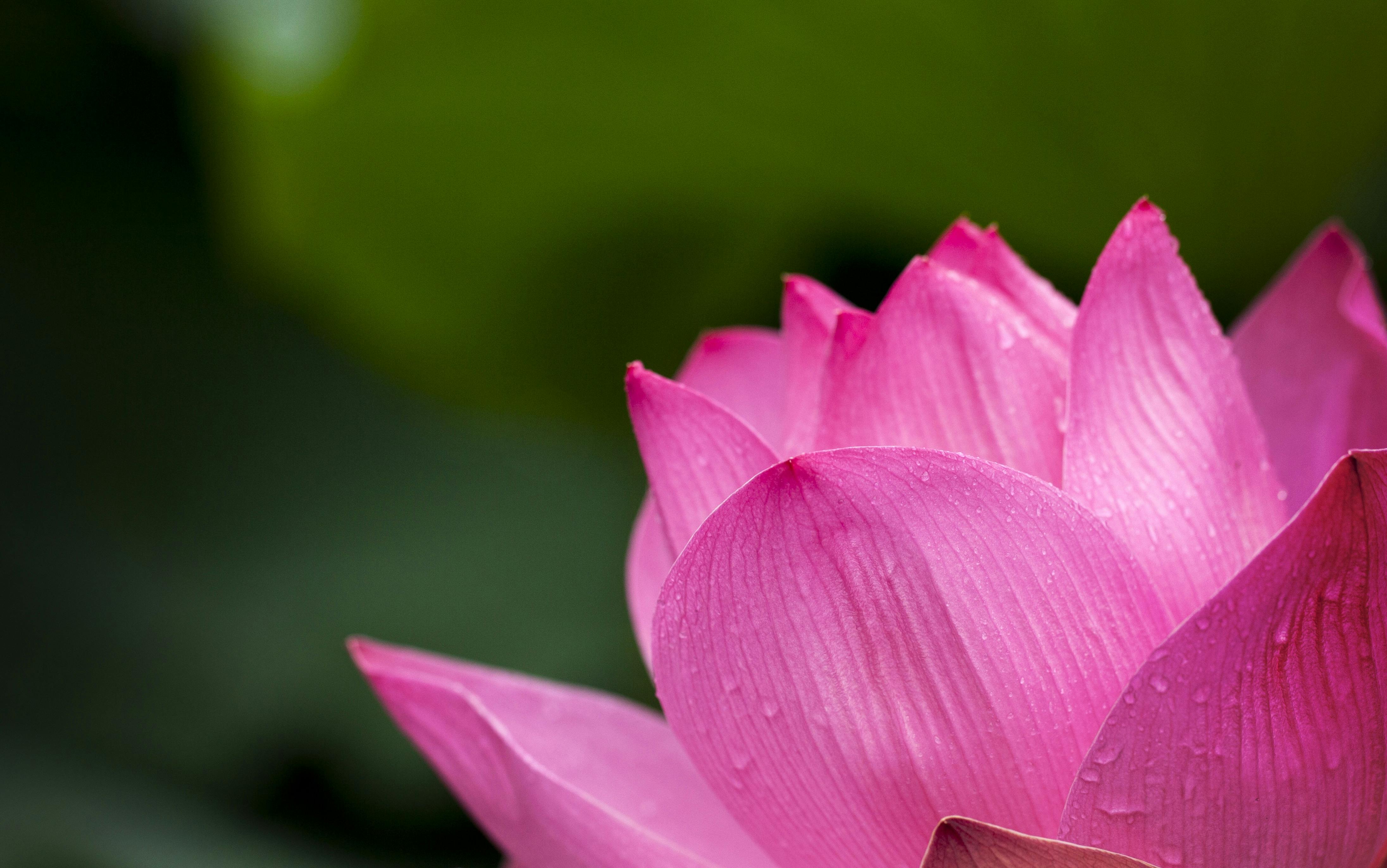
I think the lotus is representative of this video because of the references to both Brahma and the cycle of life and death. As mentioned in the video, in Hinduism, death isn't viewed in an end-all-be-all type mindset. Life and death is a constant cycle. While the physical manifestation of life and death is personified within a person's body, it is the soul that eventually lives on. As stated in the video, "the soul whose sleep leads to destruction and whose awakening leads to creation." I think the lotus is a great personification of this idea of a manifestation of a person in more ways than one. A person's soul is one that takes some work to realize and you have to peel away at the layers to get to that point. In that way, the lotus also signifies that there is beauty in all aspects of the flower, similar to a person. However, when bringing it back to the idea of life and death, it is that beauty of life that one must go through (symbolized by the multiple petals) to get to the heart and soul of it all. When at that point, the soul is free-flowing. Tying it all back to Brahma and Vishnu, Brahma is known as the creator and he resides on a lotus flower. Vishnu is the one to control the idea of "What Dies is Always Reborn," the notion that is present with the cycle of life and death.
Bibliography: Devdutt Pattanaik, Part B: Narayan
Thursday, April 20, 2017
Week 13 Story Planning: Beauty and the Beast (with a Twist)

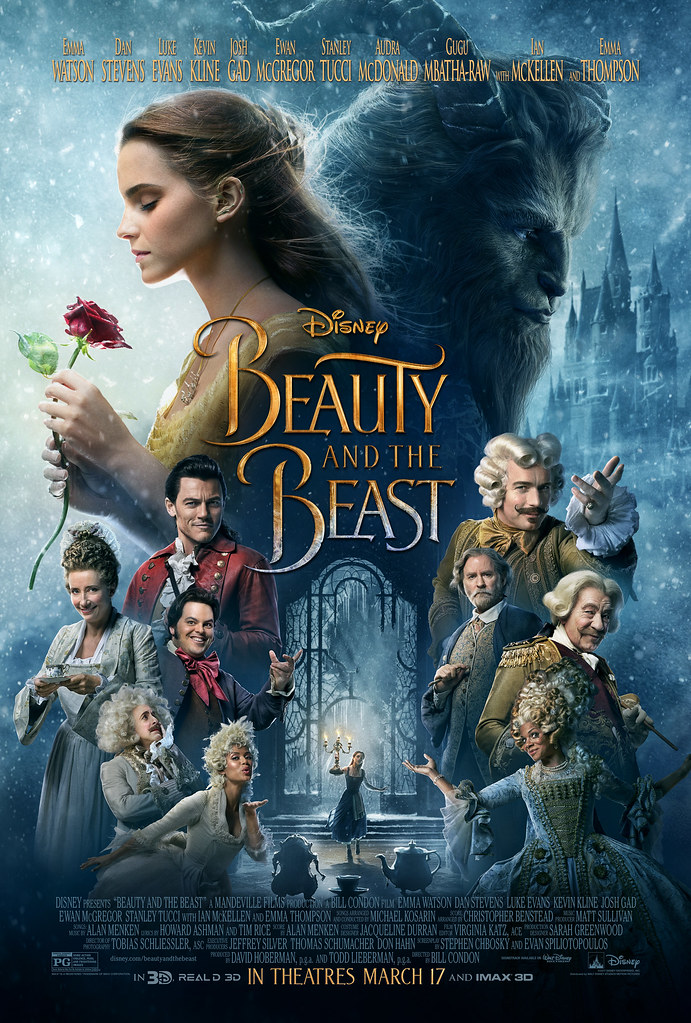
The inspiration for this story came from the Wikipedia Trails post that I created a couple weeks ago. I wanted to continue on that by making a story in which there was a re-telling of Beauty and the Beast but with an Indian Epics twist. The approach I decided to take was Sita as Belle (Beauty) and Rama as the Beast. However, instead of Sita being held hostage by Rama, she stubmles upon his castle while running away from Ravana. The main antagonist of this story would be Ravana and he is the one that casts a spell over Rama's kingdom, turning everyone in the castle into objects and Rama into a Beast, as Ravana and Rama are mortal enemies. When Sita is trying to run away from Ravana, she stumbles upon Rama's castle and meets him. However, due to the spell, Rama is isolated from the rest of his kingdom and has lost his humanity. This is where the rose comes into play because Ravana curses Rama by saying that he will stay a beast until he finds true love. When Sita shows up at the castle, it is like a complete gift to Rama and he begins to regain his humanity. The conclusion of the story would probably be that Rama turns into a human again and has an epic battle with Ravana. At the very end, the gods appear and commend Rama for his heroism and applaud him for defeating Ravana.
Bibliography: Beauty and the Beast Movie
Bibliography: Beauty and the Beast Movie
Sunday, April 9, 2017
Wikipedia Trails: Beauty and the Beast to Christ Church College
Flickr (Beauty and the Beast)
Subscribe to:
Posts (Atom)