Monday, April 24, 2017

Reading Notes, Part B: Narayan

Image result for lotus
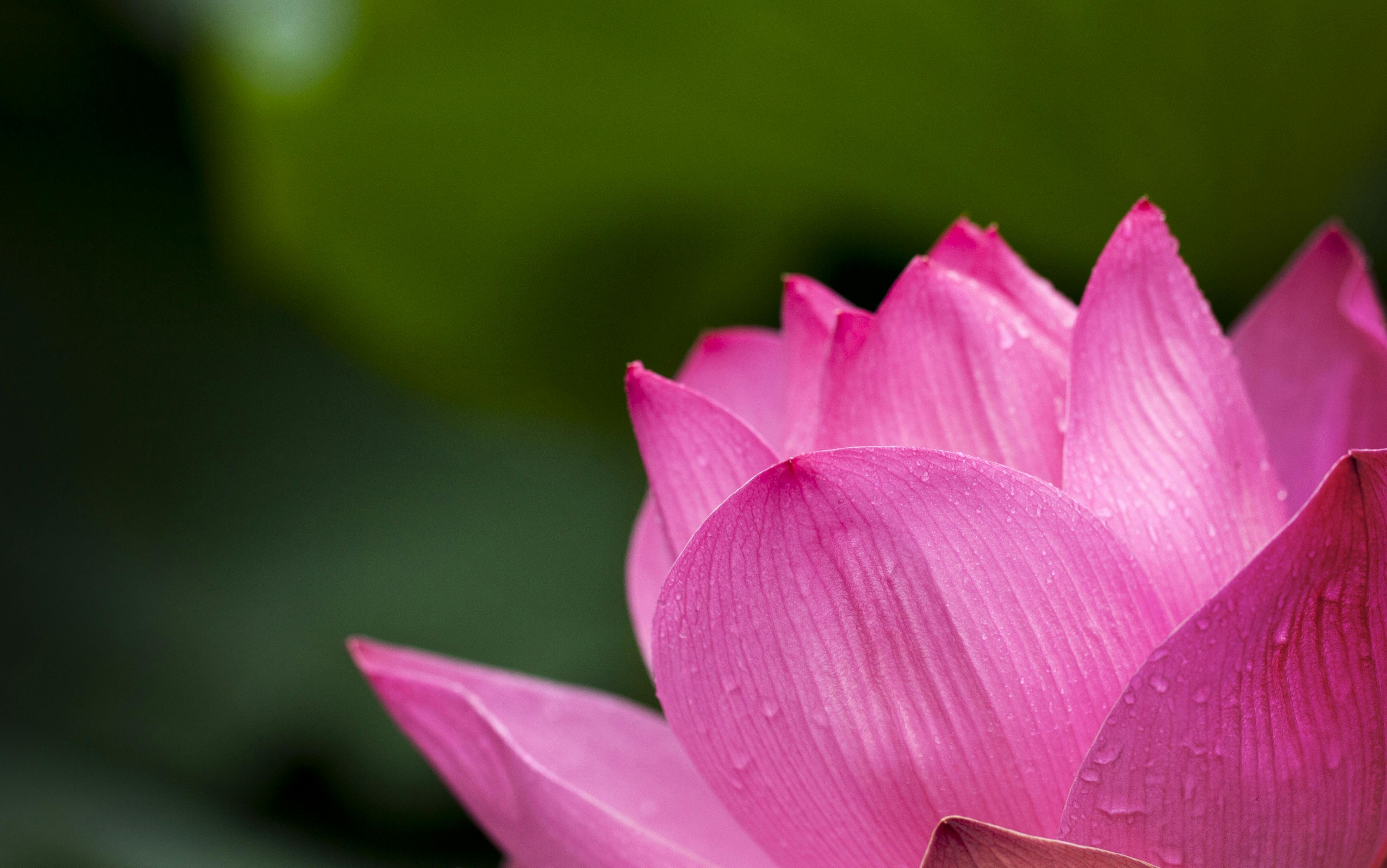
Lotus (Pexels)

I think the lotus is representative of this video because of the references to both Brahma and the cycle of life and death. As mentioned in the video, in Hinduism, death isn't viewed in an end-all-be-all type mindset. Life and death is a constant cycle. While the physical manifestation of life and death is personified within a person's body, it is the soul that eventually lives on. As stated in the video, "the soul whose sleep leads to destruction and whose awakening leads to creation." I think the lotus is a great personification of this idea of a manifestation of a person in more ways than one. A person's soul is one that takes some work to realize and you have to peel away at the layers to get to that point. In that way, the lotus also signifies that there is beauty in all aspects of the flower, similar to a person. However, when bringing it back to the idea of life and death, it is that beauty of life that one must go through (symbolized by the multiple petals) to get to the heart and soul of it all. When at that point, the soul is free-flowing. Tying it all back to Brahma and Vishnu, Brahma is known as the creator and he resides on a lotus flower. Vishnu is the one to control the idea of "What Dies is Always Reborn," the notion that is present with the cycle of life and death.

Bibliography: Devdutt Pattanaik, Part B: Narayan

Thursday, April 20, 2017

Week 13 Story Planning: Beauty and the Beast (with a Twist)

Image result for beauty and the beast
 Simple Wikipedia (Beauty and the Beast)

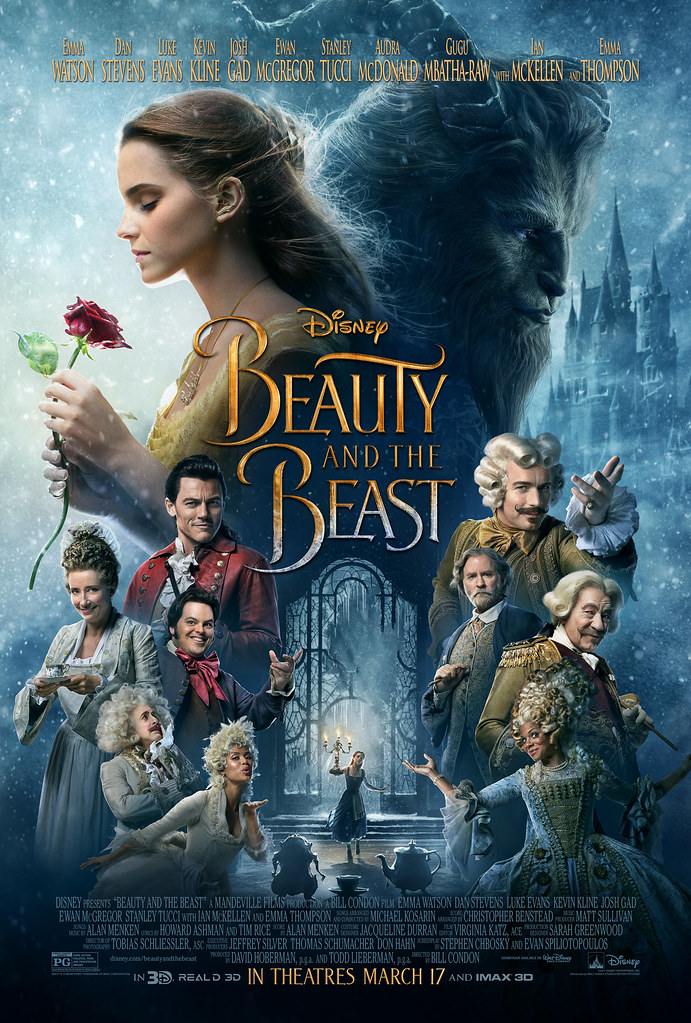
The inspiration for this story came from the Wikipedia Trails post that I created a couple weeks ago. I wanted to continue on that by making a story in which there was a re-telling of Beauty and the Beast but with an Indian Epics twist. The approach I decided to take was Sita as Belle (Beauty) and Rama as the Beast. However, instead of Sita being held hostage by Rama, she stubmles upon his castle while running away from Ravana. The main antagonist of this story would be Ravana and he is the one that casts a spell over Rama's kingdom, turning everyone in the castle into objects and Rama into a Beast, as Ravana and Rama are mortal enemies. When Sita is trying to run away from Ravana, she stumbles upon Rama's castle and meets him. However, due to the spell, Rama is isolated from the rest of his kingdom and has lost his humanity. This is where the rose comes into play because Ravana curses Rama by saying that he will stay a beast until he finds true love. When Sita shows up at the castle, it is like a complete gift to Rama and he begins to regain his humanity. The conclusion of the story would probably be that Rama turns into a human again and has an epic battle with Ravana. At the very end, the gods appear and commend Rama for his heroism and applaud him for defeating Ravana.

Bibliography: Beauty and the Beast Movie

Sunday, April 9, 2017

Wikipedia Trails: Beauty and the Beast to Christ Church College

Image result for beauty and the beast

I noticed a story about Beauty and the Beast on the Twitter page for this class the other day knew that I would end up doing a Wikipedia Trails post over it. I started off my trail with Beauty and the Beast and ended with Christ Church College in Oxford, England, essentially encompassing my love for Disney, reading, Harry Potter, and travelling. When the live-action Beauty and the Beast released in theatres a couple weeks ago, I most definitely watched it twice in the first week. There's just something about watching one of your favorite Disney movies transform from a cartoon to real people that made the movie so amazing. But, what made it even better was seeing Emma Watson as Belle because I also grew up reading and watching Harry Potter. So, obviously enough, my trail led me to read a bit about Emma Watson. Without a doubt, Emma Watson is one of my most favorite actresses: she is a strong advocate for women's rights around the world and is honestly a phenomenal actress. The next link took me to the Harry Potter Wikipedia page where I read a little general information about the movie series. But, the real point of interest on this page was the set design. It was interesting to read about the inspiration behind many of the sets for the Harry Potter movies. Specifically, it was neat to read about Christ Church College because I had the opportunity to visit it when I studied abroad. I could honestly keep going but then this post would be really long, so, once again, I will stop here. 

Thursday, April 6, 2017

Week 11 Story Planning: The Three Friends

Image result for three friends

I definitely grew up hearing the story of Ganesha and Kartikeya racing all the time. While, as a child, the biggest thing that I got from that story was that parents are so vastly important, I do believe that the moral of the story is that the world can be viewed in a number of different perspectives. The way it is explained, however, makes a lot of sense. Some people view the world in a purely subjective, emotional, and intuitive fashion. Others view the world in an objective, rational, and logical way. However, I think that one of the strongest ways to view the world is by incorporating both elements to really gain an understanding of different perspectives. I think a great story for this would be to create a situation: a college decision, relationship, coping with a tragedy, etc. and then develop a story from two different perspectives and how each person would handle the situation. Specifically, I was thinking of a story in which three friends are attempting to confront a problem. One of the friends is very logical and thinks through things in an objective and rational way. One of the other friends is very subjective, emotional and intuitive in their thinking. Finally, the last friend is logical yet intuitive and objective, with a tinge of emotion when thinking. I think this would be an interesting story to write because it would require me to think out of the box. While I may think in one fashion, my perception of how another thinks would be different. 

I think these videos do a great job of describing some of the Indian stories in a way that everyone can understand them. In that way, DP discusses the stories and how Hindus view the world told through the lens of these stories. 

Wednesday, April 5, 2017

Reading Notes: Narayan's Secret

Image result for narayana
Wikipedia Commons (Narayana)

"Just as our world does not exist when we sleep, the whole universe does not exist when God is in deep slumber..."

I think this opening line from the video was pretty insightful. Obviously, people are unaware of their surroundings when they are asleep. Unless they are incredibly light sleepers, the likelihood of the average person knowing exactly what is happening around them while asleep is quite slim. I think it would be cool to write a story about someone that is asleep and having a vivid dream but then wakes up and lives their dream and has the ability to control it this time. It would feel like deja vu because of the dream but then the person would be able to control exactly what happens while awake. I think an interesting twist to add to this story would be that other people also have similar dreams so their destinies could be linked in a way. These intertwined stories would also be a way in which to incorporate mini-stories into the larger plotline.

Monday, April 3, 2017

Reading Notes: Ganesha's Secret Video

Image result for ganesha and kartikeya

I definitely grew up hearing the story of Ganesha and Kartikeya racing all the time. While, as a child, the biggest thing that I got from that story was that parents are so vastly important, I do believe that the moral of the story is that the world can be viewed in a number of different perspectives. The way it is explained, however, makes a lot of sense. Some people view the world in a purely subjective, emotional, and intuitive fashion. Others view the world in an objective, rational, and logical way. However, I think that one of the strongest ways to view the world is by incorporating both elements to really gain an understanding of different perspectives. I think a great story for this would be to create a situation: a college decision, relationship, coping with a tragedy, etc. and then develop a story from two different perspectives and how each person would handle the situation. 

I think these videos do a great job of describing some of the Indian stories in a way that everyone can understand them. In that way, DP discusses the stories and how Hindus view the world told through the lens of these stories. 

Week 10 Growth Mindset/Tech Tip Cheezburger

Caption this picture
LOLBuilder (Dog Winking)

While I strongly believe that positivity is an important trait to have, it can often be difficult to be positive. This week, I thought that it would be fun to incorporate the Tech Tip with Growth Mindset to create an inspirational post. Often times, people get so caught up in their lives and forget that it is important to grow, to be positive, and just take some time to smile. This is especially important when thinking of growth beyond school. When we are in school, we essentially have a system guiding us through the process and there is usually help provided if necessary. But, I think once people start thinking of the future, they become scared. And that is exactly where positivity comes into play. It is easy to get caught up in one's life and forget that smiling is so incredibly important. I think that the power of the growth mindset, for me, comes from the fact that staying positive and knowing that it will be okay is so very important.