Monday, May 1, 2017

Reading Notes: Ghatotkacha

Image result for ladoo

You're probably wondering why I used a picture of food for this Amar Chitra Katha. Well, I will explain. There is a movie called Mayabazar which actually follows the tale of Abhimanyu and Vatsala's wedding. In this movie, Ghatotkacha pretends to be Vatsala after he takes her away to Abhimanyu. There is a scene in the movie when Ghatotkacha sees a room full of food for the wedding and decides to go inside and eat the food. However, he is too lazy to eat the food with his hands so he uses his magic to literally swallow the food without ever picking it up with his hands. He also makes himself enormous so that he can eat more food at once. The funny part is that there are a couple courtiers watching all of this happen from the window and they are all confused as to what is happening. As soon as Ghatotkacha is done eating, he uses magic to bring food back into all the plates and turns back into Vatsala. One of the most iconic parts of this film is a part in which Ghatotkacha has ladoos (the sweet depicted in the picture above) flying into his mouth. When I would watch this movie growing up, I used to always be scared of Ghatotkacha because of his appearance. However, reading this Amar Chitra Katha and the various stories on the side made me realize that he was one of the good guys all along and wanted Vatsala and Abhimanyu to live happily ever after.

Reading Notes: Ancestors of Rama

Image result for crown
Crown (Wikipedia)

Reading the stories about Rama's ancestors was quite interesting. Considering the fact that Rama himself was a king, so his ancestors were obviously royalty was a thought that crossed my mind while reading this story. I think a common theme when thinking of royalty is the fact that there is usually some element of violence, either a play for the highest position, revenge, or some sort of war. No matter the culture, story, country, etc. I seriously think that royalty will always be perceived in the same light. I think the other interesting part was at the end with Indumati's swayamvara. Not only is it semi-foreshadowing to Rama and Sita, but I also think it's a parallel with the beginning of the Mahabaratha. This comic gave readers a lot of background to the characters of the Ramayana, which is something that is inherent to the beginning of the Mahabaratha. I know when I first started reading the Mahabaratha, I had to draw out a family tree on a dry erase board so that I could better visualize the familial relations. While Rama's ancestors are not quite as confusing, I still thought that this Amar Chitra Katha was really fun to read. 

Sunday, April 30, 2017

Class Improvements

After reading the future planning page, I honestly really liked the review weeks to planning weeks and the thematic reading unit options. I began the semester thinking that I would be able to work a lot on my page and storybook throughout the week and ended up dedicating more time on Sundays and Mondays. This way, I was able to hit both the tail end of the previous week and the beginning of the next week. However, that is something that I realized as I progressed through the semester. So, I think that having a planning week would have been helpful in order to create my own deadlines for the future. Creating both a time management schedule and having a planning week would be a great option for some students. I think that the current set up of the class is great and it worked well for me but I could definitely see other students benefiting from a planning week. The other idea I liked on the planning page was the thematic unit option. When we had to start the free reading option, I know I spent a lot of time just trying to figure out what to read. Although there were many categories to choose from, I think it would have been neat to have had some themes in order to focus my options. It also allows for students to explore readings that they would not have previously thought of. Overall, however, I liked the way this class was set up and I'm so glad that I took it!

Tuesday, April 25, 2017

Reading Notes: Kumbhakarna

Image result for sleep
Sleeping Moon (Wikipedia Commons)

I think after eating and traveling, my next favorite thing in the world is sleeping. So, I connect with Kumbhakarna and his natural inclination to want to sleep (even though he is rakshasa, Ravana's brother, and eats people) due to the boon that he was granted. In fact, from the time I was a child to this day, my family calls me Kumbhakarni, or a female version of Kumbhakarna, because I like to sleep a lot. However, that's about the only similarity I have with the beast. Reading about Kumbhakarna is interesting because he is depicted to be a character of good traits and a generally nice person (rakshasa?) until you read about his tendency to kill and eat people. It's honestly such a stark contrast. Reading the Amar Chitra Katha and the Wikipedia page makes me wonder what a Kumbhakarna dream would be like, since he sleeps for months on end. I think it would be interesting to write a story about that since it would be a very long and drawn out sleep. 

Bibliography: 


Monday, April 24, 2017

Reading Notes: Hanuman to the Rescue

Image result for hanuman

I don't know if I have actually ever mentioned this but Hanuman is probably one of my most favorite of the Hindu Gods. He personifies a kind and giving nature, but there is just that subtle hint of mischievousness about him. I think that the cover of this comic book even helps to explain that mischievous side of him because of his facial expression. I think that this comic also does a great job of describing Hanuman since he goes to find Vishalya Karani herb for Lakshmana because he cares about Rama and Lakshmana immensely. Since he does not have time to actually go looking for the herb, he ends up picking up the entire mountain. Later on, since Surya is under the control of Ravana and has to speed up the day, Hanuman literally steals the sun so that the day doesn't end. I've heard this story many times and every time I am amused. The last additional reading is by far one of my favorite stories of all time because it is something that I would have probably imagined as a child. Mangoes are my favorite fruit and I could probably eat mangoes forever. Hanuman mistakenly eats the sun thinking its a mango and creates utter chaos on earth. I absolutely love reading Hanuman stories and enjoy that they often have morals of kindness, humour, and courage.

Bibliography: Amar Chitra Katha, Hanuman to the Rescue

Tech Tip: Blogger YouTube


This is one of my most favorite chef's ever. He is really entertaining to watch and his food is literally phenomenal.

Bibliography: Gennaro Contaldo

Reading Notes, Part B: Narayan

Image result for lotus
Lotus (Pexels)

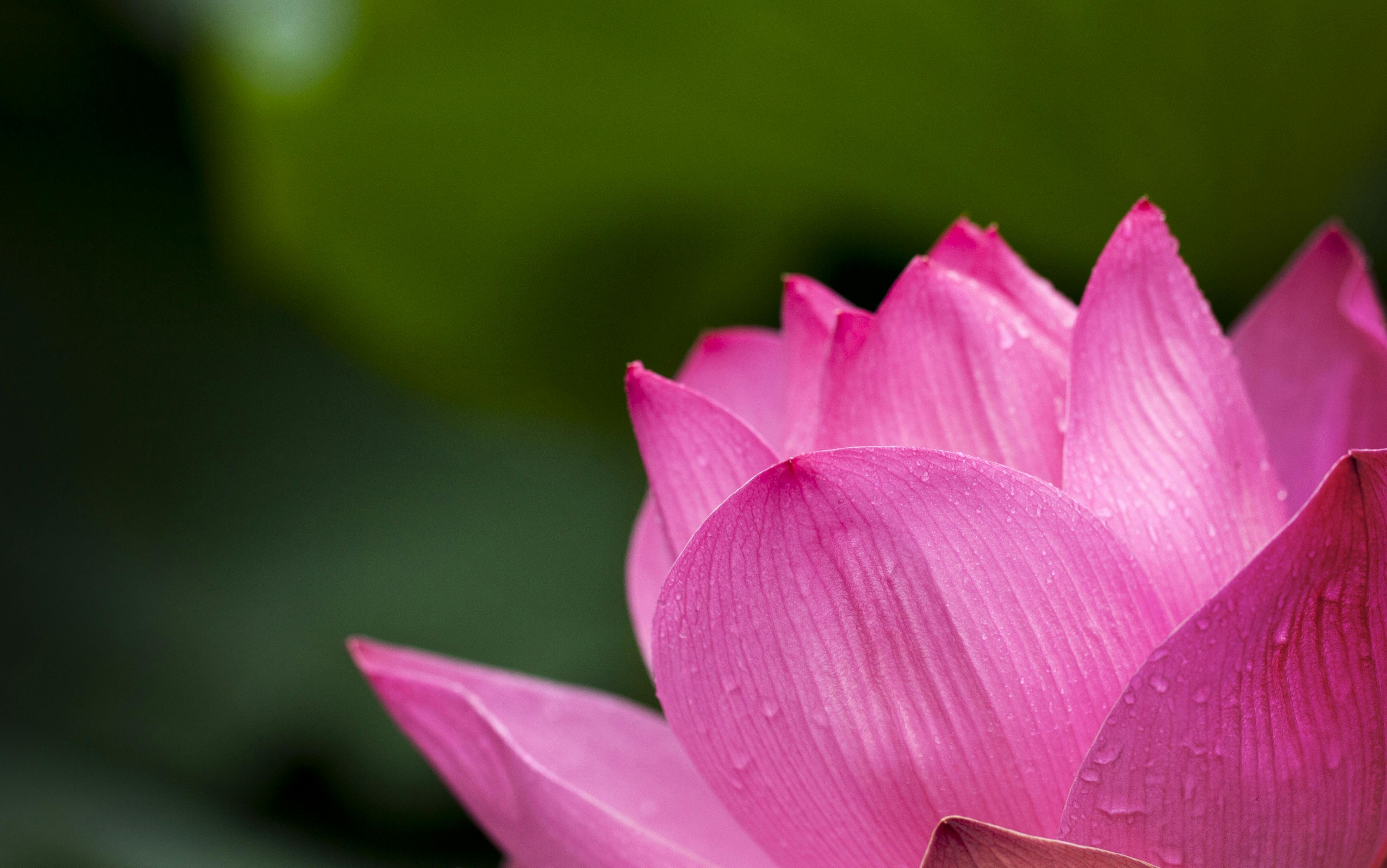
I think the lotus is representative of this video because of the references to both Brahma and the cycle of life and death. As mentioned in the video, in Hinduism, death isn't viewed in an end-all-be-all type mindset. Life and death is a constant cycle. While the physical manifestation of life and death is personified within a person's body, it is the soul that eventually lives on. As stated in the video, "the soul whose sleep leads to destruction and whose awakening leads to creation." I think the lotus is a great personification of this idea of a manifestation of a person in more ways than one. A person's soul is one that takes some work to realize and you have to peel away at the layers to get to that point. In that way, the lotus also signifies that there is beauty in all aspects of the flower, similar to a person. However, when bringing it back to the idea of life and death, it is that beauty of life that one must go through (symbolized by the multiple petals) to get to the heart and soul of it all. When at that point, the soul is free-flowing. Tying it all back to Brahma and Vishnu, Brahma is known as the creator and he resides on a lotus flower. Vishnu is the one to control the idea of "What Dies is Always Reborn," the notion that is present with the cycle of life and death.

Bibliography: Devdutt Pattanaik, Part B: Narayan

Thursday, April 20, 2017

Week 13 Story Planning: Beauty and the Beast (with a Twist)

Image result for beauty and the beast
 Simple Wikipedia (Beauty and the Beast)

The inspiration for this story came from the Wikipedia Trails post that I created a couple weeks ago. I wanted to continue on that by making a story in which there was a re-telling of Beauty and the Beast but with an Indian Epics twist. The approach I decided to take was Sita as Belle (Beauty) and Rama as the Beast. However, instead of Sita being held hostage by Rama, she stubmles upon his castle while running away from Ravana. The main antagonist of this story would be Ravana and he is the one that casts a spell over Rama's kingdom, turning everyone in the castle into objects and Rama into a Beast, as Ravana and Rama are mortal enemies. When Sita is trying to run away from Ravana, she stumbles upon Rama's castle and meets him. However, due to the spell, Rama is isolated from the rest of his kingdom and has lost his humanity. This is where the rose comes into play because Ravana curses Rama by saying that he will stay a beast until he finds true love. When Sita shows up at the castle, it is like a complete gift to Rama and he begins to regain his humanity. The conclusion of the story would probably be that Rama turns into a human again and has an epic battle with Ravana. At the very end, the gods appear and commend Rama for his heroism and applaud him for defeating Ravana.

Bibliography: Beauty and the Beast Movie

Sunday, April 9, 2017

Wikipedia Trails: Beauty and the Beast to Christ Church College

Image result for beauty and the beast

I noticed a story about Beauty and the Beast on the Twitter page for this class the other day knew that I would end up doing a Wikipedia Trails post over it. I started off my trail with Beauty and the Beast and ended with Christ Church College in Oxford, England, essentially encompassing my love for Disney, reading, Harry Potter, and travelling. When the live-action Beauty and the Beast released in theatres a couple weeks ago, I most definitely watched it twice in the first week. There's just something about watching one of your favorite Disney movies transform from a cartoon to real people that made the movie so amazing. But, what made it even better was seeing Emma Watson as Belle because I also grew up reading and watching Harry Potter. So, obviously enough, my trail led me to read a bit about Emma Watson. Without a doubt, Emma Watson is one of my most favorite actresses: she is a strong advocate for women's rights around the world and is honestly a phenomenal actress. The next link took me to the Harry Potter Wikipedia page where I read a little general information about the movie series. But, the real point of interest on this page was the set design. It was interesting to read about the inspiration behind many of the sets for the Harry Potter movies. Specifically, it was neat to read about Christ Church College because I had the opportunity to visit it when I studied abroad. I could honestly keep going but then this post would be really long, so, once again, I will stop here. 

Thursday, April 6, 2017

Week 11 Story Planning: The Three Friends

Image result for three friends

I definitely grew up hearing the story of Ganesha and Kartikeya racing all the time. While, as a child, the biggest thing that I got from that story was that parents are so vastly important, I do believe that the moral of the story is that the world can be viewed in a number of different perspectives. The way it is explained, however, makes a lot of sense. Some people view the world in a purely subjective, emotional, and intuitive fashion. Others view the world in an objective, rational, and logical way. However, I think that one of the strongest ways to view the world is by incorporating both elements to really gain an understanding of different perspectives. I think a great story for this would be to create a situation: a college decision, relationship, coping with a tragedy, etc. and then develop a story from two different perspectives and how each person would handle the situation. Specifically, I was thinking of a story in which three friends are attempting to confront a problem. One of the friends is very logical and thinks through things in an objective and rational way. One of the other friends is very subjective, emotional and intuitive in their thinking. Finally, the last friend is logical yet intuitive and objective, with a tinge of emotion when thinking. I think this would be an interesting story to write because it would require me to think out of the box. While I may think in one fashion, my perception of how another thinks would be different. 

I think these videos do a great job of describing some of the Indian stories in a way that everyone can understand them. In that way, DP discusses the stories and how Hindus view the world told through the lens of these stories. 

Wednesday, April 5, 2017

Reading Notes: Narayan's Secret

Image result for narayana
Wikipedia Commons (Narayana)

"Just as our world does not exist when we sleep, the whole universe does not exist when God is in deep slumber..."

I think this opening line from the video was pretty insightful. Obviously, people are unaware of their surroundings when they are asleep. Unless they are incredibly light sleepers, the likelihood of the average person knowing exactly what is happening around them while asleep is quite slim. I think it would be cool to write a story about someone that is asleep and having a vivid dream but then wakes up and lives their dream and has the ability to control it this time. It would feel like deja vu because of the dream but then the person would be able to control exactly what happens while awake. I think an interesting twist to add to this story would be that other people also have similar dreams so their destinies could be linked in a way. These intertwined stories would also be a way in which to incorporate mini-stories into the larger plotline.

Monday, April 3, 2017

Reading Notes: Ganesha's Secret Video

Image result for ganesha and kartikeya

I definitely grew up hearing the story of Ganesha and Kartikeya racing all the time. While, as a child, the biggest thing that I got from that story was that parents are so vastly important, I do believe that the moral of the story is that the world can be viewed in a number of different perspectives. The way it is explained, however, makes a lot of sense. Some people view the world in a purely subjective, emotional, and intuitive fashion. Others view the world in an objective, rational, and logical way. However, I think that one of the strongest ways to view the world is by incorporating both elements to really gain an understanding of different perspectives. I think a great story for this would be to create a situation: a college decision, relationship, coping with a tragedy, etc. and then develop a story from two different perspectives and how each person would handle the situation. 

I think these videos do a great job of describing some of the Indian stories in a way that everyone can understand them. In that way, DP discusses the stories and how Hindus view the world told through the lens of these stories. 

Week 10 Growth Mindset/Tech Tip Cheezburger

Caption this picture
LOLBuilder (Dog Winking)

While I strongly believe that positivity is an important trait to have, it can often be difficult to be positive. This week, I thought that it would be fun to incorporate the Tech Tip with Growth Mindset to create an inspirational post. Often times, people get so caught up in their lives and forget that it is important to grow, to be positive, and just take some time to smile. This is especially important when thinking of growth beyond school. When we are in school, we essentially have a system guiding us through the process and there is usually help provided if necessary. But, I think once people start thinking of the future, they become scared. And that is exactly where positivity comes into play. It is easy to get caught up in one's life and forget that smiling is so incredibly important. I think that the power of the growth mindset, for me, comes from the fact that staying positive and knowing that it will be okay is so very important. 

Monday, March 6, 2017

Week 8 Growth Mindset

Image result for growth mindset
Growth Mindset (Flickr)

Without a doubt, one of my "fatal flaws" is the fact that I am very critical of my work. Looking back to my post from the beginning of the semester, I wrote about taking risks and growing in that mindset. While I do continue to believe in that and try to take risks whenever possible, I know that regardless of the outcome, I am critical of the work that I put in. I definitely think that this class is a way to gain some important insights by reading stories but also by realizing that I shouldn't always be critical of my work. I think that by being more positive about my work, I can continue to grow by improvement while taking risks. 

Week 8 Reflections

Image result for reading

When I enrolled for this course, I thought that I would just be reading Indian epics, stories, fables, etc. I was definitely excited at the chance to be able to read all these stories that I grew up learning. I did not expect to create my own stories or use the epics as inspiration for my portfolio project. But, I am enjoying every minute of it. The ability to read these stories but then reflect on them in various ways is so great because it allows me to connect to the stories and remember them better. Looking through my blog made me realize that I do have the ability to write creative stories, it just takes some inspiration. Specifically, I'm kind of proud of my portfolio because the idea is something I have always had, I just never sat down to do it. But, being able to research all of the interesting architectural sights and food of the different regions of India has been a lot of fun. I hope to use all that research when I go to India again in the future! When thinking of the second half of the semester, I definitely want to read a variety of stories. I love how all of the stories are somehow tied together and usually most of them have a moral behind them. But, I think another interesting facet of this class is being able to read the other student's posts because it not only shows their creativity but helps me gain some inspiration as well! I'm excited to see what the rest of the semester holds and can't wait to read more!

Reading Notes, Mahabaratha, Part D

Image result for pandavas vs kauravas Pandavas vs. Kauravas (Wikipedia Commons)

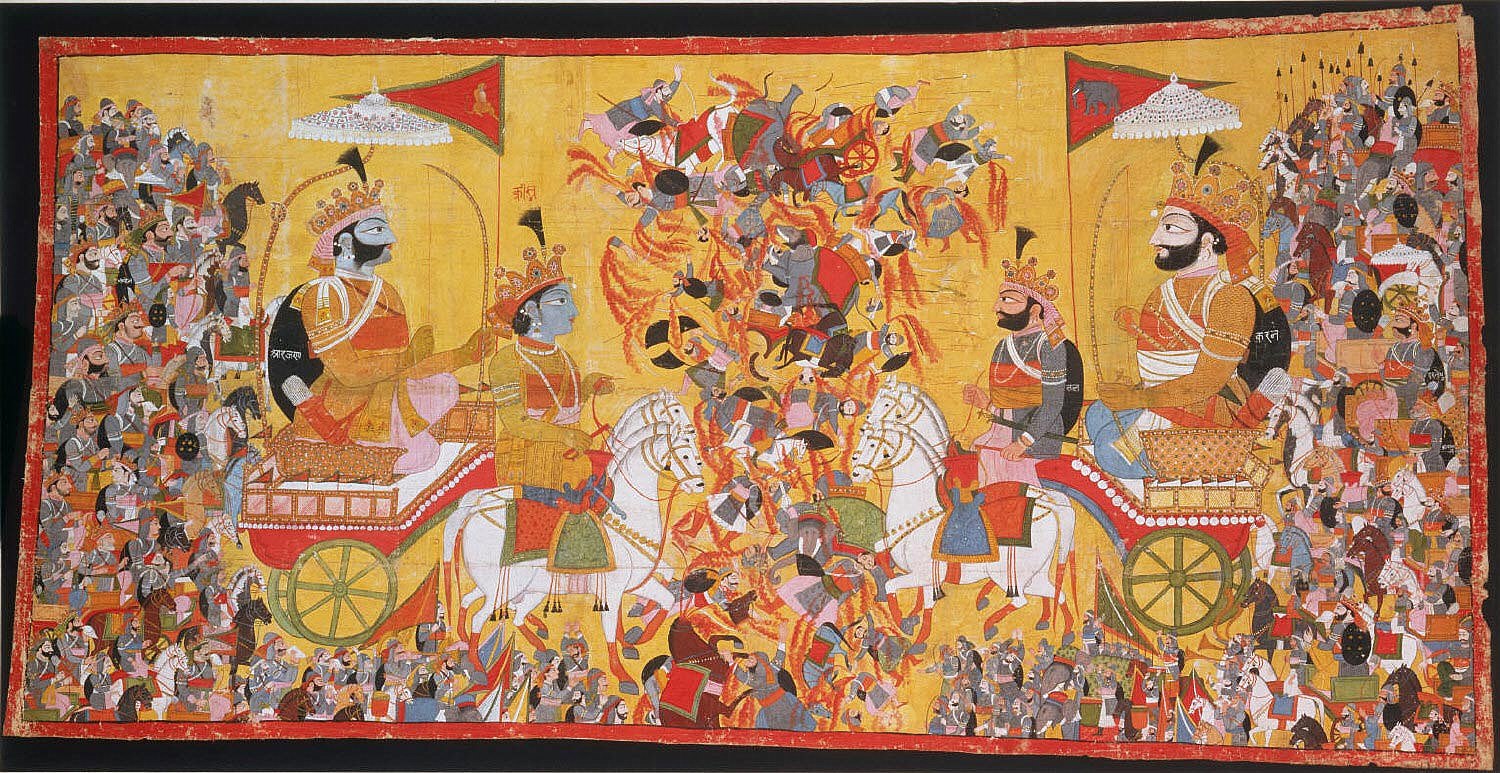
When I think of the Mahabaratha, usually what comes to mind is the battle between the Pandavas and the Kauravas. I think the way the epic is narrated, the story builds to the eventual battle--which in a way is a battle of good vs. evil like in the Ramayana. While the battle is a crucial element to the Mahabaratha, I think the importance of it lies with the Bhagavad Gita and the internal struggles that each of the characters face. It appeals to the reader because of the parallels with every day life. Obviously, not everyone faces a violent battle to the extent of the Pandavas versus the Kauravas, but, everyone faces battles in life. These battles often take form in internal disputes, relationship troubles, issues with work/school, etc. The various lessons within the Mahabartha act as a guide to facing one's problems head-on and confronting them. While Veda Vyasa wrote this epic with an elaborate battle, depicted with intricate details, he was really appealing to the common man in describing how to confront these every day battles. However, in keeping with this theme of tackling issues, he also makes sure to address the troubles that come from it. Specifically, the Pandavas are obviously distraught at the fact that their cousins are now dead, by their hands. The Bhagavad Gita, for example, helps Arjuna to come to terms with the fact that he will have to fight his cousins. In an every day context, the Gita can be applied to literally anything. And that is the beauty of the Mahabaratha. 

Bibliography: Mahabaratha, R.K. Narayan, Reading Notes

Monday, February 20, 2017

Reading Notes: Mahabaratha, Part C


Image result for spy


I think the part of the Mahabaratha when the Pandavas have to be in hiding for a year is the most difficult part of the exile. While it is somewhat easy to go to another city or the forest and live life elsewhere, it is more difficult to live in hiding in the same city that you are from. If the Pandavas were discovered, they would have had to restart their entire exile from the beginning. I think if I were to create a story from this reading, I would make one in which someone has to live in hiding in the city that they are from; maybe a spy. However, I would make it to where the spy takes down a super-evil organization from the inside. This would be similar to how the Pandavas work for King Virata's kingdom during their year of hiding.

Bibliography: R.K Narayan, MahabarataReading Notes

Reading Notes: Mahabaratha, Part B

Image result for dice game in mahabharata
Shakuni playing dice (Wikipedia Commons)

One of the common themes in many of the stories that I have read has been exile, especially in the Ramayana and the Mahabaratha. However, in both of these stories, the exiled are sent afar for a lengthy period of time, though they have really done nothing wrong. Rama and the Pandavas were honestly punished for the good morals that they possessed. However, foreshadowing the end of the Mahabaratha, good triumphs over evil, like in the Ramayana. I think the other major aspect of this story was the result of the first dice game when Draupadi's sari is unnecessarily pulled away. However, I think the important part of this section was to show the power of Draupadi's prayer to Krishna. As her sari is being pulled away, more and more cloth appears. This also signifies how the "good" are being punished when they have not done any wrong. Tying this back to a story, I think it would be interesting to write a story told in the present of someone that is sent to exile but is a valued member of society.


Bibliography: R.K Narayan, MahabarataReading Notes

Friday, February 17, 2017

Reading Notes: Mahabaratha, Part A

Image result for pandavas
Pandavas (Wikipedia Commons)

I grew up learning about the Mahabaratha and its various tales. For this set of reading, I decided to read the RK Narayan version of the Mahabaratha. However, I quickly realized that there was a lot to the backstory that I did not know much about prior to the birth of the Pandavas and Kauravas. From reading this part, however, I think it would be interesting to write a story based off of a bystander looking onto the lives of the various members of the family. Without knowing exactly who the characters are, it can get a little confusing to understand both the major characters and even the lineage in the story. In that way, I think it would be interesting to write a story based on another person's perspective looking into the family. I think it would be especially interesting to have a story about Drona training both the Pandavas and the Kauravas or the Pandavas escaping from the fire.

Bibliography: R.K Narayan, Mahabarata, Reading Notes

Tech Tip: Google Timer

I think the timer is awesome and I wish I discovered this before. Usually, when I'm studying or working on a paper, I like to take breaks. But, often times, the breaks that are meant to be 10 minutes end up being 30 minutes long. I will definitely be using the timer more in the future!